
The Executive Overreach: Power Beyond the Fee
A Response to Trump's Response to the SCOTUS Tariff decision

By framing the International Emergency Economic Powers Act (IEEPA) not as a specific tool but as a boundless reservoir of authority, the administration is effectively rewriting the social contract of trade. The core of this argument is that federal statutes contain “latent” powers only recently unlocked by judicial interpretation. Under this expanded reading, the executive claims a mandate to block, embargo, license, and restrict effectively any action short of a literal “fee” without specific Congressional oversight, all while operating under a permanent state of “economic emergency.”¹
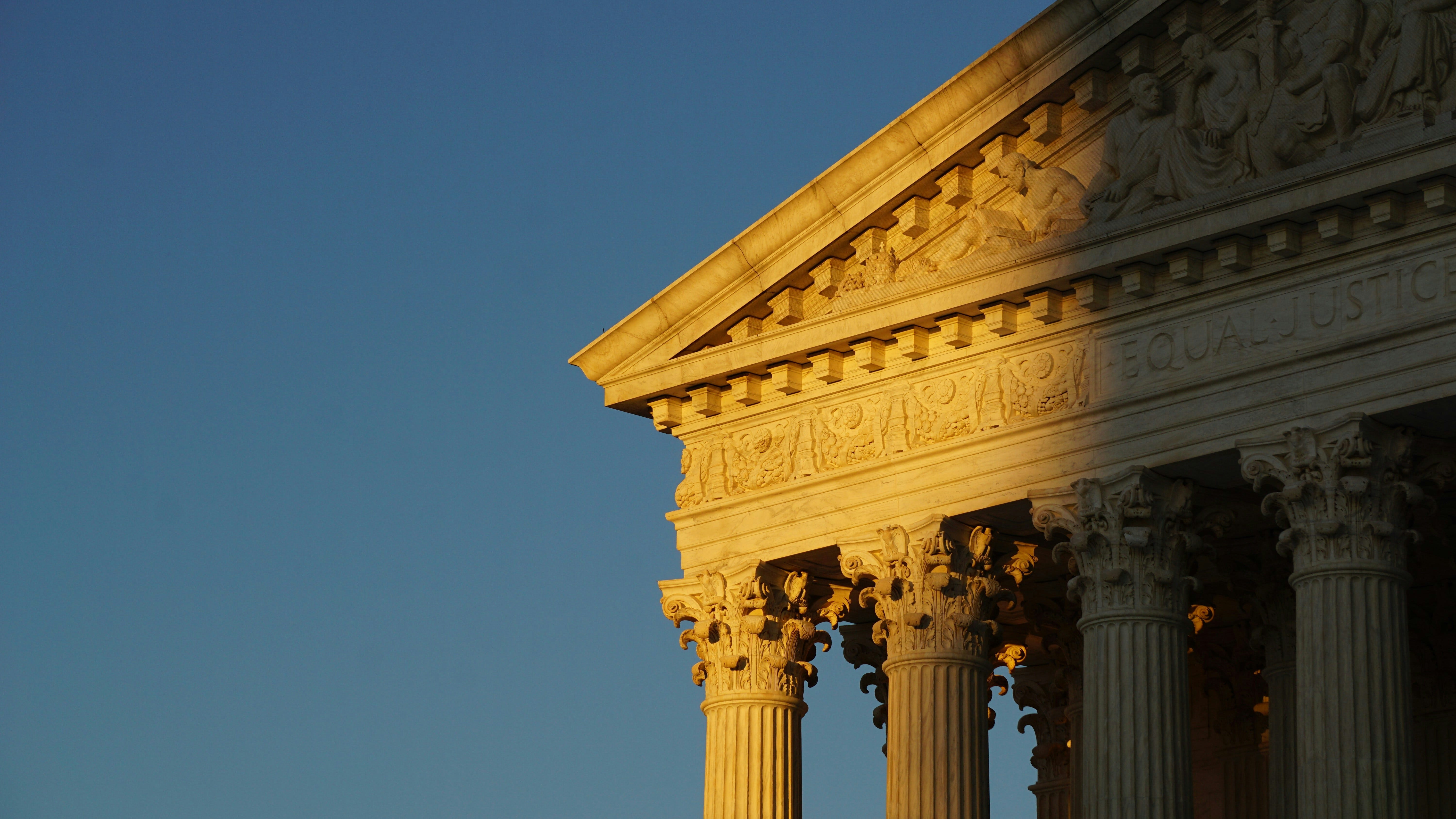
Photo by Ian Hutchinson on Unsplash
On the other side, many have celebrated recent judicial decisions as a rebuke of executive authority. I am not so sure. At first glance, the legal community and market analysts have hailed these rulings as a long-awaited “leash” on the administrative state, interpreting them as a formal check on the President’s ability to bypass Congress. To the optimistic observer, this looks like a restoration of the separation of powers, a high-water mark for judicial review that ostensibly forces the executive to return to the bargaining table. However, this celebration may be premature, if not entirely misplaced.
The reality is that a judicial “rebuke” often functions less like a wall and more like a roadmap. By defining the outer limits of what the President cannot do under the label of a “fee,” the Court has inadvertently illuminated a vast, unregulated interior space where the executive can still operate with impunity. When the administration claims it can still block or restrict trade under IEEPA so long as it avoids the specific nomenclature of a tariff, it isn’t defying the Court; it is simply pivoting within the new boundaries the Court provided. Far from a retreat of executive power, we may be witnessing its refinement into a more sophisticated, and ultimately more permanent, form of economic unilateralism.²
The most contentious element of this shift lies in the mechanics of judicial refunds. If courts eventually rule these tariffs unlawful and order the Treasury to return the revenue, we face a systemic failure of equity. Currently, the question of this massive fund of apparently illegal tariff revenues threatens to become a legal free-for-all—or, more likely, a quiet surrender. In the initial phase of any trade war, companies rarely absorb tariff costs; they pass them to the public through higher shelf prices.³
If the government returns that money to the specific corporations capable of launching such a suit, rather than the diffuse consumers actually harmed by those price hikes, it creates a perverse profit loop. The result is a massive redistribution of capital: collected from the public via inflation, then handed to corporate balance sheets via legal “restitution.”
The fiercest defense of these corporate refunds will likely come from the administration’s ostensible opposition. We can expect establishment Democrats to adopt “restitution” as a rallying cry, framing it as a return to the “rule of law” and “market stability.” By championing the return of funds to corporations, they satisfy their donor bases while appearing to oppose executive overreach. In this environment, no power center on either side of the aisle gains anything from fighting for the consumer; both are insulated by mutual contempt for the unorganized masses.
The political machinery is simply not geared to return dispersed funds to the people; it is designed to facilitate the flow of capital toward organized special interests.⁴ Without a structural shift in how we organize trade remedies, restitution becomes nothing more than a mechanism for corruption.
Footnotes
IEEPA Scope: The International Emergency Economic Powers Act (50 U.S.C. § 1701) grants the President broad authority to regulate commerce after declaring a national emergency. While historically used for sanctions, the current administration’s interpretation suggests it can be used as a general-purpose trade tool to bypass the Taxing Clause.
The “Roadmap” Effect: Legal scholars often note that when the Supreme Court strikes down a specific method (like a “fee”), it provides a “negative space” definition. If the Court says, “You cannot do X to achieve Y,” the Executive Branch often interprets that as “You may do A, B, and C to achieve Y, provided you do not call it X.”
Incidence of Taxation: Economic studies on the 2018-2019 tariff cycles (e.g., Cavallo et al., 2021) found that nearly 100% of the cost of U.S. import tariffs was passed through to total domestic prices, meaning the “harm” was felt by the consumer, not the importing entity.
Concentrated Benefits vs. Dispersed Harms: This follows the “Public Choice Theory” pioneered by Mancur Olson. Because the benefit of a refund is concentrated (billions for a few firms), those firms lobby intensely. Because the harm is dispersed (a few dollars per consumer), the public has no economic incentive to organize a counter-lobby.